The Gillingham company, which eventually ran four plants, was started by George Burge Jr, who had been introduced to Portland cement manufacture by Isaac Johnson at Crown. The plant began with four small chamber kilns (55 t/week). By 1882, a block of five (85 t/week) and a block of ten (170 t/week) had been added. Around 1889 a block of eight (200 t/week) was added, giving a total capacity of 510 t/week. Around 1898, the original block was abandoned (it seems to have collapsed) and blocks of two (60 t/week) and four (100 t/week) were added. APCM operated the plant until 31/7/1908, when it was closed, but was left intact. The mayor of Gillingham, John Robert Featherby, recruited Robert Glandfield and F S Watt - both managers with A/BPCM - to form the Gillingham Syndicate (registered 14/4/1914). APCM put them under a ten-year bond not to put in a rotary kiln, and they began with chamber kilns around 1915. The rotary kiln was ordered ten years later. The list of equipment and costing of the rotary plant can be seen here. The plant on re-opening was uprated with a further block of twelve chamber kilns (360 t/week), giving a total capacity of 975 t/week. The plant had at one time a 1 km tramway running to the quarry which was adjacent to the London/Dover railway, but it never had a rail link, and used mostly water transportation. In early 1930 the rotary kiln was fitted with slurry sprays, as at Harbury. As at all other such installations, this was claimed to be a means of reducing dust emissions, but it was reported to the Borough council that "the trouble had become worse instead of better". After two years of prevarication, the sprays were removed in March 1932, and later replaced with a chain system. The Depression following upon the installation of A1 put the plant in permanent debt, and Rugby bought it cheaply. The upgraded plant at Rochester being in place, and the raw material reserves being limited, it was immediately closed. Although official closure was in 1/1939, fforde shows that the plant ceased to function at Christmas 1937. The kiln was moved to Rugby as part of kiln A4. The site was redeveloped: the old plant is an industrial site, while the rotary kiln area is under housing. The quarry is a park. The Gillingham Portland Cement Company was kept alive by Rugby as a holding company for various purposes, and continues today as a subsidiary of CEMEX.
Power supply
The original plant was entirely direct-driven by steam engine. From 1915, the plant used electricity purchased from the Gillingham Corporation power plant for most purposes. The plant was completely electrified in 1926, using purchased power.
Rawmills
The plant used a washmill on the wharf, combining chalk brought by tramway with clay as it was unloaded. In 1929 three washmills were installed at the quarry and a second on the wharf. Chalk slurry was pumped to the plant by a 770 m pipeline and combined with clay in the mills on the wharf.
One rotary kiln was installed:
Kiln A1
Supplier: Edgar Allen
Operated: ?late 1926-12/1937
Process: Wet
Location: hot end 578945,169030: cold end 578885,169045: unenclosed.
Dimensions: 200’0”× 10’0”B / 9’0”CD (metric 60.96 × 3.048 /2.743)
Rotation (viewed from firing end): anticlockwise
Slope: 1/24 (2.388°)
Speed: 0.4-0.8 rpm
Drive: 37 kW motor
Kiln profile: 0×2743: 2845×2743: 4877×3048: 16256×3048: 18288×2743: 60960×2743: tyres at 1829, 21717, 37490, 56921: turning gear at 34747.
Cooler: rotary beneath firing floor: 58’0” × 6’0” (metric 17.68 × 1.829)
Cooler profile: 0×1829: 17678×1829: tyres at 3962, 14630
Fuel: Coal
Coal Mill: direct: rotary drier followed by two Clarke Chapman CR5 Turbo Pulverisers
Exhaust: via drop-out box and ID fan to the stack.
Typical Output: 1926-1935 160 t/d: 1936-1937 228 t/d
Typical Heat Consumption: 1926-1935 8.0 MJ/kg: 1936-1937 7.92 MJ/kg
The Gillingham plant, founded in 1874, was bought out by J. B. White & Brothers Ltd in 1893, and subsequently became part of APCM. Due to relatively poor communications and restricted raw material reserves, it was not selected as one of the few plants for development, and it was closed down in 1908. The site was in 1914 sold to the Gillingham Syndicate (which became in 1920 the renewed Gillingham Portland Cement Company Ltd) under the condition that rotary kilns would not be installed for ten years. The company planned to order a rotary kiln after ten years. The kiln was obtained from Edgar Allen, and a contract for the purchase was drawn up dated 31/10/1925. The contract is to be found in the Rugby Archive, held at the Warwickshire County Records Office, temporary catalogue number RC/11/3/3.
The contract itself is of typical format and is of little interest, but the list of equipment to be supplied is included in the appended Schedule, and this is given below. It gives an impression of the scope of equipment required to convert a static kiln plant to rotary operation, and shows the order of magnitude of the cost.
Values of imperial units (as of 1925) used in the text (alphabetical order): 1 acre = 0.40468424 Ha: 1 ft = 0.30479947 m: 1 gallon = 4.5460756 dm3: 1 HP (horse-power) = 0.7456998 kW: 1 inch = 25.399956 mm: 1 psi (pound-force per square inch) = 6.89478 kPa: 1 ton = 1.01604684 tonne: 1 yard = 0.91439841 m.
£1 (1925) is approximately £79 (2024).
THE SCHEDULE above referred to Drawing No. 12242 - General Arrangement (Note 1). Drawing No. 12220 - Survey Plan.
SECTION 1: SLURRY WASHING AND MIXING PLANT.
Item No.
Description
Price
1.
Three 18 ft dia. Wash Mills for Chalk in the Quarry (Note 2), complete with Harrows, Grids and Screens, Driving Gear, Lay Shaft and Supporting Girders in Rolled Steel Sections. Vertical Shafts to have Ball Thrust Footsteps, and Fast Driving Pulleys supplied on Lay Shaft.
£1,253
0
0
1a.
One Set of 8" x 16" Three Throw Slurry Pumps for Quarry Washmill (Note 3).
£300
0
0
2.
One 18 ft dia. Washmill for Clay on Wharf with Gearing and Screens interchangeable with existing Clay Washmill. Complete with Line Shafting, Driving Pulley, Throw-out Clutch Gear (Note 4), and top Supporting Girders for gearing in rolled steel sections.
£415
0
0
3.
One Set of Three Throw Slurry Pumps 8" dia x 16" stroke, for finished Slurry, with Double Spur Gearing, including Pinion for Washmill Line Shaft (Note 5). Exclusive of Suction and Delivery Piping (Note 6).
£291
0
0
4.
Two Sets of Ironwork for 40 ft dia. Concrete Mixer Tanks, 12 ft depth of Slurry (Note 7). Consisting of Vertical Shafts with Gearing and Footsteps with Ball Bearings, Mild Steel Stirring Grids, Line Shaft, Double Reduction Gearing, and Fast & Loose Pulleys. Top Supporting Girders for gearing in Rolled Steel Sections.
£934
0
0
5.
Two Sets of Three-throw Slurry Pumps 8" dia x 16" stroke, complete with Line Shaft, Second Reduction Gear and Driving Pulley, with Throw-out Pinions on the Pumps, exclusive of Suction and Delivery Piping (Note 8).
£600
0
0
6.
Complete Suction, Delivery, and Overflow Piping Connections for Slurry Pumps, consisting of 6" dia. Cast Iron Flanged Piping, with Bolts, Jointing material, Stop Valves etc (Note 9).
£215
0
0
TOTAL FOR SECTION 1 . . .
£4,008
0
0
Note - Item 6 refers to the Connecting Pipes for the Kiln Pumps Item 5. No Suction and Delivery Piping is included for the Single Set of Pumps Item 3.
SECTION 2: ROTARY KILN ETC.
Item No.
Description
Price
1.
One Automatic Slurry Feeding Apparatus for the Rotary Kiln, complete with Supports and Worm Reduction Gearing (Note 10).
£111
0
0
2.
One Rotary Kiln 9 ft dia., by 200 ft long parallel, ¾" shell, four Cast Steel Tyres and Rollers, Mild Steel built-up Bedplates (Note 11), Cast Steel Driving Gear with machine-cut teeth with the exception of the large Ring and Pinion which would be machine moulded, Counter-shaft and Driving Pulley, Slurry Lifters (Note 12) fitted to the Inlet end of Kiln.
One Mild Steel Hood on wheels.
£7,205
0
0
Extra for Enlarged Burning Zone, 10 ft dia (Note 13).
£300
0
0
3.
One Set of Fittings for Brick Chamber of Rotary Kiln, including Damper and Operating Gear, Draught Ring, Slurry Feed Pipe, four Cleaning-out Doors, and Inspection Door.
£277
0
0
4.
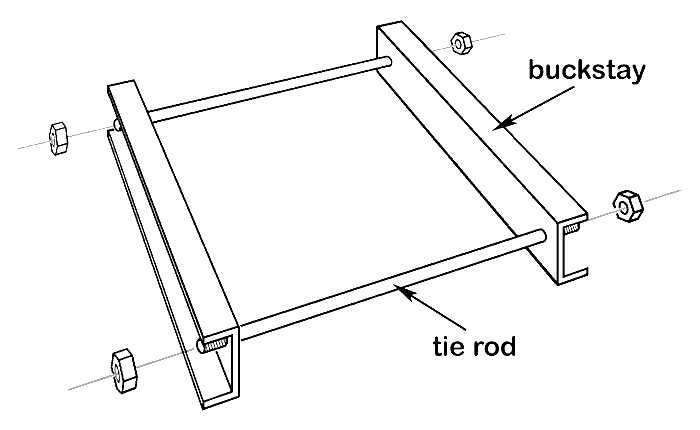
One Set of Tie Rods and Buckstays for brickwork to Rotary Kiln Dust Chamber (Note 14).
£224
0
0
5.
One Rotary Cooler 6 ft dia. x 61 ft long, with Cast Steel Supporting Tyres and Rollers, similar to Rotary Kiln, together with Fittings for brickwork chamber.
£1,364
0
0
6.
One set of Tie Rods and Buckstays for Brickwork Chamber for Cooler Hood (Note 15).
£60
0
0
7.
One Set of Firebrick Linings for the Rotary Kiln, Cooler, and Kiln Hood.
£1,025
0
0
TOTAL FOR SECTION 2 . . .
£10,566
0
0
Note - Chimney for Rotary Kiln not included.
SECTION 3: COAL PLANT.
Item No.
Description
Price
1.
One Inclined Band Conveyor for raw Coal, 18" wide by 190 ft centres of Drums, complete with Driving Gear, Tension Gear, Fast & Loose Pulleys, Troughing and Return Rollers, Mild Steel Framing, Rubber and Canvas Band, exclusive of Supports from ground level, and Throw-off Carriage, but including 4 Mild Steel Ploughs for Throwing off the coal on top of the Silos (Note 16).
£699
0
0
2.
One Mild Steel Feed Hopper including Supports to ground level, and one Discharge Shoot at end of Conveyor.
£91
0
0
3.
Two 3 ft dia. Table Feeders under Silos, complete with Mouthpieces and Slides suitable for fixing to customers Ferro-Concrete Silos, including Mild Steel Shoots to Band Conveyor.
£136
0
0
4.
One Band Conveyor under Silos, 18" wide by 50 ft long, complete with Driving Gear, Fast & Loose Pulleys, Framing etc.
£217
0
0
5.
One Inclined Continuous Bucket Elevator 12" wide Buckets x 30 ft centres, complete with Driving Gear, Fast & Loose Pulleys, Framing, Rubber and Canvas Belt, and including Mild Steel Head Shoot and Inlet Supports for same.
£259
0
0
6.
One Rotary Coal Dryer 4'6" dia., by 40 ft long, large enough for drying coal for two Rotary Kilns (Note 17). Complete with Driving Gear, Cast Steel Tyres, supporting Rollers and Beds, Furnace Fittings, Inlet Hood and Outlet Shoot, Draught Rings for brickwork and short Connecting Flue in Mild Steel to Chimney Base, Damper and Frame.
£830
0
0
7.
One Mild Steel Chimney for Dryer 3'9" dia. by 60 ft high.
£192
0
0
8.
One Set of Tie Rods and Buckstays for Coal Dryer Brickwork (Note 18).
£79
0
0
9.
One 12" dia. Spiral Conveyor in Mild Steel Casing 30 ft long with Fast & Loose Pulleys.
£86
0
0
10.
One Vertical Steel Cased Elevator 55 ft centres, for dried Coal, complete with Buckets, Chain, Driving Gear, and Fast Driving Pulley, Inlet and Head Shoots.
£209
0
0
11.
One 12" dia. Spiral Conveyor in Mild Steel Casing 30 ft long, with Gearing and Fast & Loose Pulleys.
£101
0
0
12.
One Mild Steel Hopper for dried coal, approximately 30 tons capacity (Note 19), exclusive of structure to ground level, but including Connections to Turbo Pulverisers.
£252
0
0
13.
Two C.R.5 Turbo Pulverisers (Note 20) for Coal Firing the Kiln, exclusive of Motor.
£1,600
0
0
14.
One Set of Piping Connections for Turbo Pulverisers connecting Cooler to Kiln.
£164
0
0
15.
Shafting for the Coal Plant, consisting of two Countershafts with Turned Steel Shafting, Self-Oiling Bearings, Soleplates, Pulleys etc.
£50
0
0
TOTAL FOR SECTION 3 . . .
£4,965
0
0
SECTION 4: CLINKER GRINDING PLANT.
Item No.
Description
Price
1.
One Mild Steel Discharge Shoot from Cooler with Supports.
One Mild Steel Hopper to Clinker Weigher.
One Automatic Clinker Weighing Machine.
£160
0
0
2.
Two Vertical Steel Cased Elevators for Clinker, 45 ft centres, complete with Driving Gear, and Fast & Loose Pulleys, Buckets and Chain. One Elevator to take from Cooler, and one from Yard Stock heap.
Two Mild Steel Feed Hoppers for Clinker at Elevator Boots.
Two Mild Steel Head Shoots.
£460
0
0
3.
One Mild Steel Hopper for filling Clinker Trucks on Yard Gantry, complete with Outlet Door but exclusive of Supports.
£25
0
0
4.
One Steel Band Conveyor for Clinker 18" wide by 95 ft centres of Drums, complete with Driving Gear and Pulley, Tension Gear, Framing, Drums, Idlers, V-Plough over first Clinker Hopper, and Mild Steel Discharge Shoot at end, exclusive of Gantry and Supports to ground level.
£322
0
0
5.
One Mild Steel Clinker Hopper about 30 tons capacity, including Supports to ground level, and one 4 ft dia. Table Feeder for Clinker to Cement Combination Mill, and 21" dia. Table Feeder for Gypsum (Note 21).
£450
0
0
6.
One Allen's "STAG" Combination Tube Mill 6 ft dia. x 32'6" long for Clinker grinding, with three compartments, including Cast Steel and Cast Iron Bar Linings, machine cut Cast Steel Helical Wheel and Pinion, short Countershaft and Flexible Coupling (Note 22).
£2,520
0
0
7.
One Charge of Metallic Grinding Media for the above Mill.
£496
0
0
8.
One 12" dia. Spiral Conveyor in Mild Steel Casing 48 ft long with Driving Gear, Fast Pulley and Mild Steel Breeches Shoot (Note 23).
£135
0
0
9.
Shafting consisting of One Countershaft for driving Clinker Elevator and Band Conveyor.
£44
0
0
TOTAL FOR SECTION 4 . . .
£4,612
0
0
SECTION 5: ELECTRIC MOTORS.
Fifteen Motors and Starters and Controllers, as follows:-
Best Balata Driving Belts from Motors to the machines specified in our Tender including Drives from Countershafts to Elevators etc.
£225
0
0
TOTAL FOR SECTION 6 . . .
£225
0
0
SUMMARY.
Section 1 -
Slurry Washing & Mixing Plant.
£4,008
0
0
Section 2 -
Rotary Kiln Plant.
£10,566
0
0
Section 3 -
Coal Plant
£4,965
0
0
Section 4 -
Clinker Grinding Plant.
£4,612
0
0
Section 5 -
Fifteen Motors and Starters
£3,537
0
0
Section 6 -
Driving Belts
£225
0
0
TOTAL . . .
£27,913
0
0
(Twenty seven thousand, nine hundred and thirteen pounds)
Sealed in the presence of:
Wm Crosby
Director
W Y Coles
Director
E R Burkinshaw
Secretary
In addition to the work done by Allen, various items were provided by the plant or other contractors. My rough estimate of the 1925 cost of these follows (Note 25):
LOCALLY SUPPLIED ITEMS.
Description
Price
Quarry Pipeline
£2,540
Pipeline from wharf to kiln feed mixers
£730
Kiln feed mixer vessels
£200
Pump house
£75
Back end building
£350
Back end chamber
£160
Four kiln piers
£375
Kiln motor house
£20
Kiln and cooler building
£1,300
Cooler chute
£70
Coal store and drier building
£640
Cooler piers
£30
Clinker elevator structure
£295
TOTAL . . .
£6,785
This raises the total cost to £34,698, which can be split between three sections:
Allen
Local
Total
Raw milling
£2,855
£3,270
£6,125
Kiln
£19,607
£3,515
£23,122
Finish milling
£5,451
0
£5,451
Total
£27,913
£6,785
£34,698
The kiln produced about 160 t/d, or 54,400 tonnes for a 340 day year, so the total cost was £0.6378 per annual tonne, or about £32 in 2016 money. Allen were at the time in cut-throat competition with Vickers and had lost several orders to them, so Gillingham may have got a fairly favourable deal, at least for the main items of equipment.
The Gillingham company is discussed at some length in Lesley Cook's book. Having started up in 1920 in time for the brief early-1920s boom, the Gillingham company after five years operation could probably have raised most of the cost of the project from revenue, but a certain amount of debt was taken on. Commissioning of the plant was promptly followed by the 1931-1933 downturn, and large losses were made in 1930-1932. After this, modest profits were made, but any thought of expansion was abandoned, and the company began to look for prospective buyers. The company was finally sold to the Amalgamated Roadstone Corporation in 1937 for less than £100,000. It was sold on to Rugby in 1939 and promptly closed. The kiln was transferred to the Rugby plant as part of Kiln 4.
A 1935 photograph shows the location of many of the items in the Allen list.
The Gillingham plant quarried its chalk from the lands belonging to the Featherbys. George Featherby had started a brickworks on a wide tract of land to the east of Gillingham, taking brickearth overlying the chalk. He made the chalk available to the cement company when it formed in 1874, receiving royalties. Featherby's substantial obituary (Chatham, Rochester & Brompton Observer, 23/5/1903, p2) gives some idea of his local significance.
We regret exceedingly to announce the death of Mr George Featherby, which occurred in the early hours of Thursday at his residence, "Abergeldie", Balmoral Road, New Brompton, after a very brief illness. Mr Featherby, who had a somewhat eventful life, was one of the oldest residents of New Brompton, his acquaintance with the town dating back to the time when most of the area now covered by streets consisted of cornfields. Mr Featherby’s decision to come to this district was the result of an accident--- a most fortunate accident for New Brompton, for it sent into a young and rapidly growing place a man who played no small part in its industrial development.
George Featherby was born at Bush, near Cuxton on the 10th of September, 1821, and was therefore nearly 82 years of age. He was by trade a blacksmith, as his father had been before him, and in 1852, at the time of the Australian gold rush, he went out to that colony. He worked as a blacksmith at Forest Creek, Victoria, for three years, and liked the life so well that he came back to England to fetch his wife and family. The second voyage out was marked by disaster, for when within one day’s sail of Melbourne the ship was wrecked, and Mr Featherby and family were fortunate in escaping death. As it was, they lost everything except the clothes they were wearing and the money in their pockets. In spite of this inauspicious start, however, Mr Featherby did well "down under". He forsook his old trade, taking a large hotel instead. There were no bricks in Forest Creek in those days, and Mr Featherby’s premises were built of lath, plaster and weather-boards, for which he had to pay a very heavy rent. Still, he made things hum, and though he did not make what is called a pile, he did so well that in 1862 he set off once more for the old country. A brief rest followed; then Mr Featherby took over some licensed premises in Whitechapel (London). After having had a long experience of sixpenny glasses of beer and such lordly prices in Australia, the penny glass of the East Ender did not suit Mr Featherby. He had just made up his mind to go again to the Antipodes when he met with an accident which broke his kneecap and put the idea of a third voyage out of court. Instead he came to Rochester, and started a brickmaking industry at Rainham. Subsequently he bought the estate known as the Courtfields Brickworks, Gillingham, of which he was owner up to the time of his death. Mr Featherby also opened out brickfields at Norwood and Beckenham, and recently at Rochford (Essex). It was owing to the deposit of chalk found on Mr Featherby’s estate that the Portland Cement Works were started at Gillingham some 28 years ago. The Vineries which are too well known throughout Kent to need description, were started in 1884. The deceased gentleman was twice married. His first wife (note Amelia Bullbrook), by whom he had four children, was sister of the late Mr John Bullbrook, of Rochester. His second wife, who he married late in life, and who survives him, was a Scotch lady named Mrs Hair (note Elizabeth). She has no children. Deceased was a member of the old Board of Health for some years, and was a member of the Gillingham Urban District Council until six years ago, when his place was taken by his son, the present Chairman of the Council, Mr J R Featherby. He was also a director of the Public Hall Company and of the Conservative Club. Up to the day he was seized by the illness which has proved fatal, Mr Featherby conducted all his multifarious business affairs, and found time in addition, to take a very keen interest in the public life of the town. He was one of the "old standards", and his familiar figure and genial presence will be very much missed indeed.
His son, John Robert Featherby gradually took over management of his father's businesses, and became involved in the local government of the area. Gillingham, which was essentially an aggregation of the eastern suburbs of Rochester/Chatham, had been a Sanitary District until it became an Urban District in 1894. J R Featherby became its chairman in 1897. The population of the later Borough area was rapidly rising (1881 20891; 1891 28040; 1901 42745; 1911 52252). With Kent separated from its London suburbs, it was fact the largest town in Kent. Featherby began to campaign for Borough status, and this was achieved in 1903 - he became its first Mayor, and operated a municipalist policy - a miniature Joe Chamberlain. He became, and remained, chairman of the water works, and immediately set up a municipal electricity power station.
APCM shut down the Gillingham plant in 1908. Featherby was irritated by this, and began to negotiate with a number of its relocated staff. A deal was made whereby the site could be acquired by a new consortium, provided that only static kilns were operated for the first ten years. The Gillingham Syndicate was then set up on 14/4/1913, with J R Featherby providing capital. The Syndicate negotiated with, among others, the Gillingham Corporation for the supply of electricity. The Corporation guaranteed them energy at a little over half the going rate. The plant finally started producing in 1915, and managed to keep going throughout the war despite manpower shortages. No doubt, the relatively automated state of the plant aided this, as did protestations to the recruitment authorities that they were doing "government work". On 15/6/1920, a rejuvenated Gillingham Portland Cement Co. Ltd. was incorporated, and the Syndicate was wound up. The first Directors were J R Featherby, Robert Glandfield Snr, Horace Charles Mitchell (solicitor, 1876-1924), Samuel Smethurst and Charles Willis (insurance broker, ex-Mayor of Rochester, 1862-1943). The Featherbys continued to call themselves Brickmakers and Horticulturalists in the 1921 census. They also obtained a substantial obituary (Chatham, Rochester & Gillingham Observer, 21/7/1922, p7):
Death of ex-Mayor and his son. Ald. John Robert Featherby, the man who piloted Gillingham through its early stages as a borough, passed away at his residence "Bleak House", on Wednesday, after a severe illness at the age of 74. The news of his death as it spread through the town carried with it a note of deep sadness for Alderman Featherby was a man beloved by all classes of the "biggest borough in Kent", which owed an immeasurable debt of gratitude to him for the great services he had rendered. Expressions of sympathy were heard on all hands, and at most of the principal buildings in the town, flags were flown at half-mast.
Mr Featherby was a man with an extensive experience of business life. Although he was born in England, the greater part of his early days was spent in Australia with his father, returning to his native land at the age of 14. He engaged in brickmaking, and up to the time of his death he displayed a keen interest in that work, being connected with a firm of brick makers in Sussex. Of a versatile character, he was also devoted to the science of horticulture and glass house produce, this department of the business being started by his father, the late Mr George Featherby, in 1884. At one time the firm sold produce to Covent Garden market. Ald. Featherby’s knowledge of fruit growing was distinctly developed.
He was ever a prominent man in business affairs. For many years he was chairman of the Board of Directors of the firm of Messrs G H Leavy and Co., and he was the director of the local Waterworks Co., up to the time of his death. He helped to found and was one of the directors of the Chatham and District Laundry Company, Ltd., and a director of the Gillingham Portland Cement Company, Ltd. In addition, the engineering firm of Featherby’s Ltd., of Bishops Stortford, Herts, of which his son, Harry, is managing director, undoubtedly owes a great deal of its development and success to his business intellect.
It was, perhaps, in public life that he was most known and respected. Although holding many positions, he never refused to assist any cause which stood for the welfare of the Medway Towns. Two of his most noteworthy offices connected with work outside of Gillingham were as warden of the Rochester Bridge (as representative of the Gillingham Town Council) and a member of the Medway Conservancy Board. His record of public work in Gillingham will ever be remembered. Since 1885 Ald. Featherby had been a member and for some years foreman of the Court Leet, and many will remember the sorrow he displayed when the ancient institution was disbanded towards the end of last year. He held the office of High Constable in 1892, and was an overseer from 1886 to 1896, was elected a member of the Urban district Council in 1897, and was appointed chairman of that body in 1899, holding office until the borough was incorporated in 1903, when he was chosen as Charter Mayor. Mr Featherby played an active part in securing the Charter and presided over several meetings, when he successfully dealt with the turbulent spirits of those opposed to the movement. At the time of the Incorporation he was elected an Alderman and had served on the Council ever since. During his tenure of office as first citizen, the Mayoress, who passed away some time ago, was mainly instrumental in securing by public subscription the present handsome Mace. On May 7th, 1921, the town conferred upon him the greatest honour which lay within its power to give, in the presentation to him of the freedom of the Borough. In receiving the honour Mr Featherby, in a speech, tinged with emotion, said that it would be treasured by him throughout his life and when he passed away it would be handed down to his family who, he was sure, would value it as a token of the esteem in which he was held. His great interest in his town was exhibited when, though evidently in a low state of health, he attended the recent meetings of the Town Council.
Ald. Featherby had a great love for music and possessed a very fine voice. A man, who commanded the admiration of all with whom he came into contact, he will be much missed in the life of the community. Ald. Featherby left two sons and two daughters.
The funeral takes place to-morrow at the Grange Road Cemetery.
DIED LAST NIGHT
We regret to announce that during last night Mr C B Featherby, second son of Ald. Featherby, whose obituary appears above, passed away at his residence, Domus, Cobham, at the age of 47. He leaves a widow and four children.
NOTES
Note 1. Unfortunately, these two plans are apparently not present in the archive. They may be around somewhere, and are obviously of great interest.
Note 2. Prior to this, chalk was brought from the quarry by tramway. The 120 HP motor for these (see Section 5) was sufficient to drive two of the three. It may be that these were two rough mills, used alternately, and a screening mill.
Note 3. No reference is made to any storage capacity before the pumps, or to the 770 m pipeline to the plant wharf. These may already have been present, or were supplied by the plant. All four pumps in the schedule are 8" dia x 16" stroke three-throw pumps. These have a displacement of 0.0395 m3 per revolution, and working at 20 rpm and 90% volumetric efficiency would deliver 42.7 m3/hr. Slurry at 42% water content contains 0.913 tonnes of solids per cubic metre, so 42.7 m3/hr = 39 t/hr solids, equivalent to about 24 t/hr of clinker, well in excess of the 7 t/hr rating of the kiln, so the day's pumping could be done in 7 hours. Flow from the quarry was aided by a 13 m drop in altitude.
Note 4. References to clutches and fast-and-loose pulleys show that the plant still had much equipment sharing motors through layshafts.
Note 6. The line to the kiln feed tanks was about 225 m and supplied by the plant.
Note 7. The stirrer mechanism and delivery pipework is listed, but the plant had to supply the mixer vessels. From photographs, the mixers had simple rotating stirrer beams, and not a sun-and-planet design. There is no indication of any other finished slurry blending equipment. A 40 ft mixer had a nominal capacity of 414 m3, equivalent to 236 tonnes of clinker - about 34 hours of kiln run. Evidently slurry production would have to be at least six days a week. The tanks were probably swapped every morning, with one being filled during daylight hours, while the other fed the kiln, having been stirred overnight to homogenise the slurry. Such a system would inevitably give hit-and-miss chemical control, and tank swapping would always be disruptive. Capacity was tight, allowing little latitude for rawmill breakdowns. With the later uprating of the kiln, the capacity was insufficient. However, this deficiency must have become apparent at an early stage, because by 1932 another mixer (45 ft, capacity 294 clinker tonnes) had been installed next to the wharf washmills.
Note 8. The two pumps and two mixers were all driven by a single common 22 kW motor. Two pumps are provided because pumping is continuous, and a second pump is necessary to continue work during breakdowns and maintenance. Each pump could supply two kilns.
Note 9. The two slurry mixers were close to the kiln feed end, with the pump house in between. The total pipe run for feed and overflow was about 50 m, with an 11 m lift.
Note 11. The piers were concrete and were supplied by the plant.
Note 12. These were simple channel lifters. By 1930, Allen were providing kilns with slurry sprays.
Note 13. Allen were labouring this point, since an enlarged burning zone had already been selected. They continued to encourage "straight" kilns.
Note 14. The masonry of the dust chamber was provided by the plant.
Note 15. The masonry of the cooler chute was provided by the plant.
Note 16. The support structures of all the conveyors, the buildings and the silos (size not known) were provided by the plant.
Note 17. This is the only intimation that a second kiln was contemplated. Turbo pulverisers were always provided with driers, although the mills themselves were said to be able to cope with high-moisture coal, and an extra level of complexity was involved. The need for a dry feed was probably more to do with handling and maintaining a constant flow.
Note 18. The masonry of the end hoods and piers was provided by the plant.
Note 19. 30 tons capacity would give around 15 hours run.
Note 20. These were made by Clarke, Chapman & Co of Gateshead. They were supplied mainly for boiler firing, particularly in ships, and were available in a range of sizes. I have been unable to find the significance of "CR5". Allen claimed to have exclusive rights for their use on cement kilns. They were also installed at Harbury, Dunstable, Rugby, Barnstone and Sundon, and all these were subsequently replaced with Alfred Herbert Atritors.
Note 21. This is the only mention of gypsum, and arrangements for its handling are unclear.
Note 22. Identical mills were installed at Chinnor and Harbury, although the Harbury mill had a 400 HP motor.
Note 23. The screw was only long enough to plumb into the existing cement conveyor system, which extended over ten bins.
Note 24. Prices of individual motors were not given. This column gives the total value roughly apportioned.
Note 25. There may be items I have missed or got wrong: I shall be glad to hear of these.